
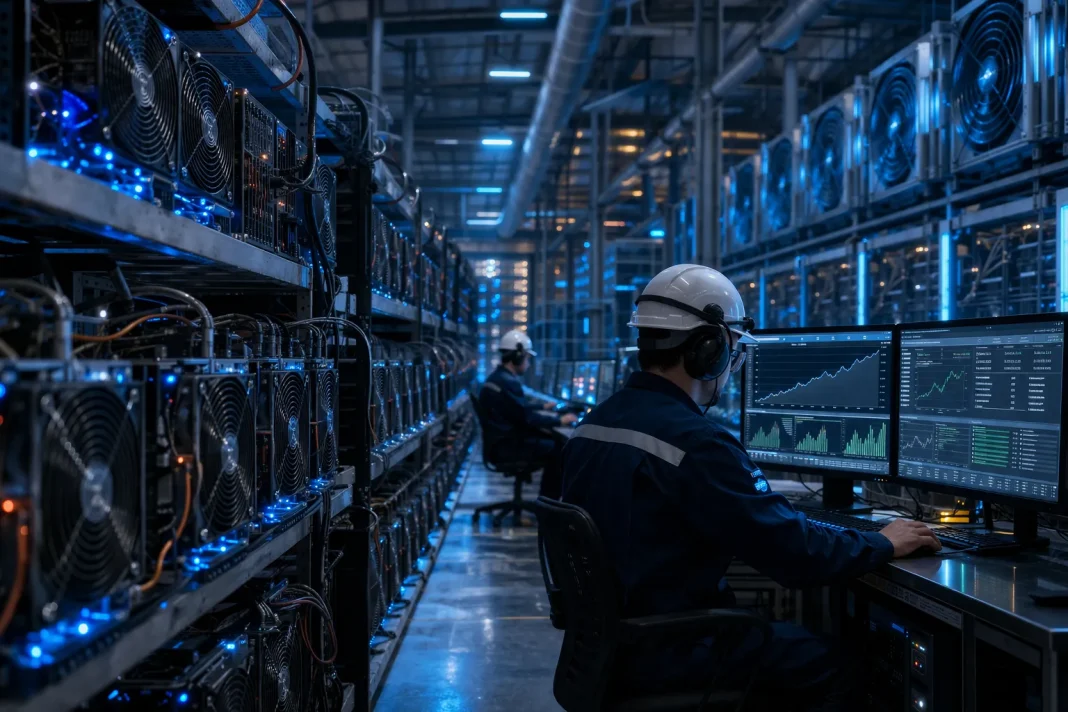
Bitcoin mining difficulty has reached a fresh all-time high, another sign that the global mining race is becoming more competitive.
That matters for two reasons at once. For the Bitcoin network, higher difficulty generally points to stronger security and deeper mining participation. For miners, however, it creates a tougher operating environment where efficiency, uptime, and energy costs matter more than ever. Blockchain.com’s network difficulty data defines difficulty as a relative measure of how hard it is to mine a new block, while its hash rate chart frames total mining power as a core network metric.
A new difficulty high is not just a technical milestone. It is also a business signal. It suggests that serious mining capacity is still being deployed, that competition is intensifying, and that miners with weaker hardware or expensive electricity are likely to feel the squeeze first.
- Difficulty: New record high
- Network trend: Hashrate remains elevated
- Miner pressure: Increasing
- Main takeaway: Efficient operators gain the advantage
Why Bitcoin Mining Difficulty Keeps Rising
Bitcoin adjusts mining difficulty automatically to keep block production close to its intended pace. When more mining power joins the network, the protocol raises difficulty so blocks do not arrive too quickly.
In practical terms, rising difficulty usually reflects several developments happening at once: more industrial-scale mining farms coming online, wider deployment of next-generation ASIC hardware, and continued investment in operations that can scale efficiently. The relationship between mining power and difficulty is visible in Blockchain.com’s hash rate chart, which tracks how much computing power is securing the Bitcoin network over time.
That broader shift is also why Bitcoin mining now looks far more like infrastructure than a hobby industry. The deeper mechanics behind block production, rewards, and miner competition are already better suited to how Bitcoin mining actually works, while this article stays focused on what the latest record means right now.
What This Means Now
- A stronger Bitcoin network does not automatically mean easier mining economics.
- Rising difficulty increases pressure on inefficient miners first.
- Scale, hardware quality, and electricity strategy matter more as competition intensifies.
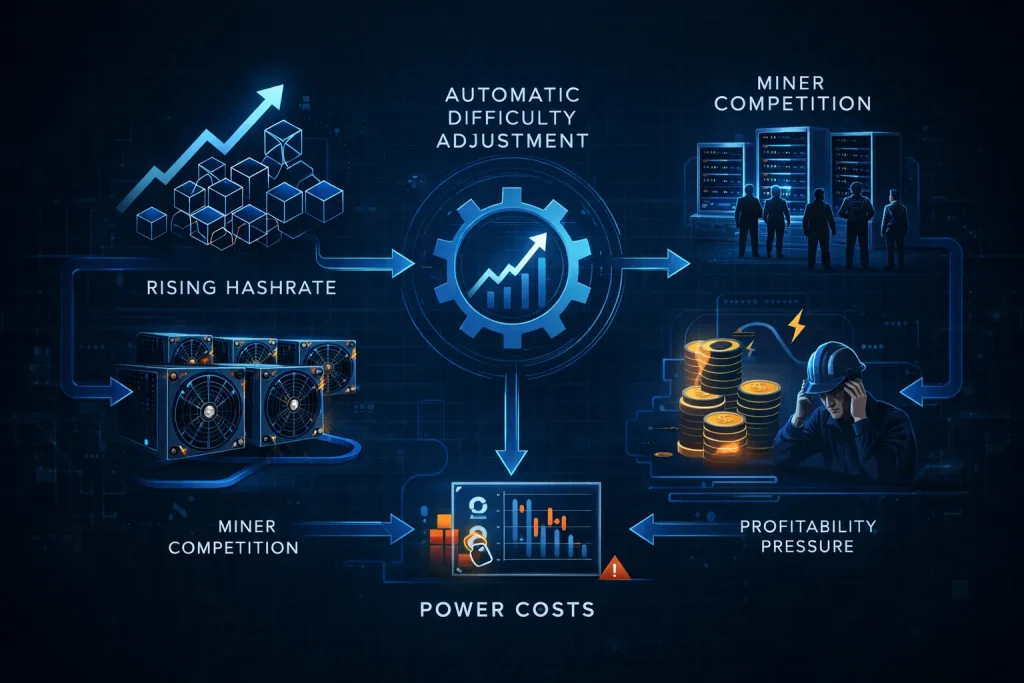
Image caption: As Bitcoin hashrate rises, the network adjusts difficulty upward, increasing competition, power sensitivity, and profitability pressure for miners.
What a New Difficulty High Means for Miners
A rising difficulty level does not affect every miner equally.
Operators with modern machines, efficient cooling, disciplined maintenance, and access to cheaper electricity are usually in a much stronger position. But miners running older hardware, weaker infrastructure, or higher energy costs face a much tighter margin for error.
That is where the real pressure begins. As competition rises, even small inefficiencies start to matter more. Downtime becomes more expensive. Heat management becomes more important. Power contracts matter more. A mining operation that looked sustainable under easier conditions can become far less competitive when difficulty moves higher.
That is also why difficulty cannot be separated from mining economics. The broader cost picture becomes much clearer when placed next to Bitcoin mining profitability in 2026, where electricity cost, mining hardware efficiency, network hash rate, and Bitcoin price all shape the outcome.
Stronger Network, Harder Business Environment
One of the biggest mistakes in mining coverage is treating a difficulty increase as either fully bullish or fully negative.
It is both supportive and challenging, depending on the angle.
From the network’s perspective, rising difficulty is generally associated with resilience. More miners competing to secure Bitcoin usually means a stronger and more secure network. From the operator’s perspective, though, the picture is more demanding. A stronger network often means a harder business environment, because each increase raises the bar for efficiency.
That reality becomes even clearer once electricity enters the picture. The Cambridge Bitcoin Electricity Consumption Index tracks Bitcoin electricity demand and consumption methodology, which is why the energy side of mining should be treated as a structural issue rather than a side note. That makes Bitcoin mining energy consumption the right internal reference here without repeating that full explainer again.
“A record mining difficulty is not just a network milestone — it is a live stress test for miner efficiency.”
Why Industry Consolidation Could Accelerate
Another important consequence of rising difficulty is that it can speed up consolidation across the mining sector.
When mining becomes more competitive, the advantage tends to shift toward operators with larger fleets, stronger balance sheets, better procurement terms, and access to more favorable energy markets. Smaller miners are not automatically forced out, but the environment becomes much less forgiving.
That is why record difficulty matters beyond the next adjustment cycle. It can gradually reshape the structure of the mining industry itself. The more the network rewards scale, uptime, and efficiency, the more likely it is that stronger operators continue gaining share while weaker ones struggle to keep pace. This longer-term direction fits naturally with the future of Bitcoin mining in 2030, where the sector is framed as increasingly industrial, capital-intensive, and specialized.
The Hashrate Story Is Bigger Than the Headline
Most short mining updates stop at one simple conclusion: hashrate is rising, so difficulty is rising.
That is true, but incomplete.
The deeper story is that Bitcoin mining increasingly rewards operational quality. A fresh difficulty high suggests that the network is absorbing more competition, but it also suggests that mining success is becoming more dependent on infrastructure strength rather than simple participation alone.
That affects strategy across the board. Fleet upgrades matter more. Energy sourcing matters more. Cooling reliability matters more. Even payout consistency matters more. mempool.space’s hashrate and difficulty view works well as a live visual reference, while why solo Bitcoin mining is almost impossible today expands the payout side of the story naturally.
Strong Miner vs Weak Miner in a High-Difficulty Market
Strong miner
- Modern ASICs
- Cheaper electricity
- Efficient cooling
- High uptime
- Better margins
Weak miner
- Older machines
- Expensive power
- Heat and downtime issues
- Thin margins
- Greater risk of being squeezed out
What Miners Should Watch Next
After a new difficulty high, the next question is not whether mining became harder. It did.
The more important question is whether miners can offset that pressure through better efficiency, smarter scaling, and stronger cost control. If hashrate keeps climbing while weaker operations remain exposed to high power costs and aging hardware, margin pressure across parts of the industry could continue. For stronger operators, though, this environment can also create opportunity. A tougher network does not remove profitability for everyone. It raises the standards needed to achieve it.
Final Takeaway
Bitcoin mining difficulty hitting a new high is a sign that competition across the network is still intensifying.
For Bitcoin itself, that points to continued strength in the mining layer and a more secure network. For miners, it is a reminder that the industry keeps moving toward greater efficiency, stronger infrastructure, and tighter economics.
The headline may be about difficulty, but the real story is about the changing shape of mining. Each new high reinforces the same message: Bitcoin mining is becoming more industrial, more competitive, and far less forgiving for operators that fail to optimize.
FAQ
What is Bitcoin mining difficulty?
Bitcoin mining difficulty is the measure of how hard it is to mine a new Bitcoin block. Bitcoin adjusts it automatically to help keep block production close to the network target.
Why does Bitcoin mining difficulty increase?
Difficulty usually rises when more mining power joins the network. As hashrate grows, Bitcoin increases difficulty so blocks do not arrive too quickly.
Is higher mining difficulty good for Bitcoin?
From a network perspective, higher difficulty is generally associated with stronger security. For miners, it also means more competition and tighter operating conditions.
Does higher difficulty make Bitcoin mining less profitable?
It can. Operators with older hardware, expensive electricity, or weak efficiency usually feel the pressure first when network difficulty rises.
How often does Bitcoin adjust mining difficulty?
Bitcoin adjusts mining difficulty roughly every two weeks to keep average block times near 10 minutes.
