
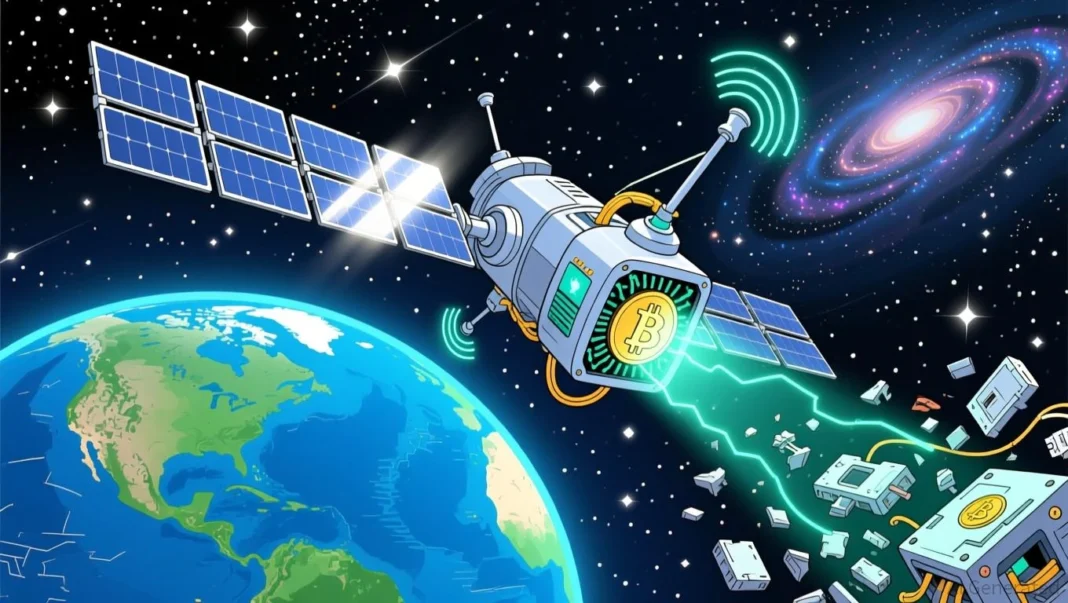
The race to innovate in the cryptocurrency industry has reached a new frontier — outer space. A startup called Starcloud has revealed an ambitious plan to launch Bitcoin mining infrastructure into orbit, potentially transforming how and where cryptocurrency mining takes place.
If successful, this project could redefine the economics and sustainability of mining while opening an entirely new chapter in blockchain infrastructure.
In this article, we explore how space-based Bitcoin mining could work, why companies are exploring it, and what challenges the idea faces.
Why Starcloud Wants to Mine Bitcoin From Space
Bitcoin mining is an energy-intensive process that requires massive computational power to validate transactions and secure the network. Traditionally, mining farms are built in locations with cheap electricity such as Iceland, Texas, or Kazakhstan.
However, Starcloud believes space could provide unique advantages that Earth-based mining facilities cannot match.
Key motivations behind orbital mining:
1. Unlimited Solar Energy
Satellites in orbit receive continuous solar radiation without atmospheric interference. Solar panels in space can generate power more efficiently than those on Earth, potentially providing a clean and constant energy source for mining operations.
2. Lower Cooling Costs
Mining hardware generates large amounts of heat. Cooling infrastructure is one of the biggest operational costs for miners.
In space, the natural vacuum environment could make thermal management more efficient, reducing cooling expenses.
3. Energy Independence
Space-based mining would not rely on national electricity grids or energy markets. This could help companies avoid regulatory restrictions and fluctuating electricity prices.
4. Experimental Infrastructure
The project also serves as a technological experiment for building autonomous computing infrastructure in orbit, something that could eventually support future decentralized networks.
How Bitcoin Mining in Orbit Would Work
Mining Bitcoin requires solving cryptographic puzzles using specialized machines called ASIC miners. Starcloud plans to adapt this hardware for operation in space.
The proposed system includes:
Orbital Mining Satellites
- Satellites equipped with ASIC mining rigs
- Solar panels for energy generation
- Radiators to dissipate heat into space
Data Communication
Mining satellites would transmit hash calculations and receive new block data through high-speed satellite communication links connected to ground stations.
Autonomous Operation
Because maintenance missions are expensive, the satellites would operate largely autonomously, using onboard software to manage workloads, temperature, and connectivity.
If the satellites successfully mine Bitcoin blocks, the rewards would be transmitted to wallets controlled by the operating company.
Could Space Mining Be More Profitable?
The economics of mining in orbit remain uncertain. Launch costs, hardware durability, and maintenance could make the idea expensive compared with traditional mining farms.
However, several factors might offset those costs:
- Zero electricity bills due to solar power
- Continuous power generation in orbit
- Reduced cooling infrastructure
If launch costs continue to fall thanks to reusable rockets and private space companies, space-based data centers could become economically viable.
Technical Challenges Starcloud Must Solve
While the concept is exciting, it faces significant engineering hurdles.
Radiation Exposure
Space radiation can damage electronics. Mining hardware would need additional shielding and fault-tolerant designs.
Hardware Failures
On Earth, miners can replace faulty equipment quickly. In orbit, repairs may require costly space missions.
Data Latency
Mining depends on fast communication with the Bitcoin network. Satellite latency could impact efficiency if not properly optimized.
Launch Costs
Transporting heavy mining hardware into orbit is still extremely expensive, although prices have dropped significantly in recent years.
The Bigger Vision: Decentralized Infrastructure in Space
Starcloud’s experiment reflects a growing trend toward decentralized infrastructure beyond Earth.
Future possibilities include:
- Orbital data centers
- Space-based AI computing
- Satellite blockchain nodes
- Interplanetary internet infrastructure
If successful, the project could inspire a new category of space-powered Web3 infrastructure, where satellites help secure blockchain networks from orbit.
What This Means for Bitcoin Mining
Bitcoin mining has evolved dramatically since the early days of CPU mining in 2009. Over time, it progressed through GPUs, ASICs, and massive industrial mining farms.
Space-based mining could represent the next experimental phase in the evolution of the industry.
While it remains uncertain whether orbital mining will become practical at scale, Starcloud’s initiative demonstrates how far innovation in the crypto sector continues to push technological boundaries.
Conclusion
Starcloud’s plan to mine Bitcoin from orbit may sound like science fiction, but it highlights the ongoing search for more efficient, sustainable, and decentralized computing infrastructure.
If the project succeeds, space could become an unexpected new arena for cryptocurrency mining — turning satellites into floating blockchain data centers orbiting Earth.
Whether this vision becomes reality or remains an experimental milestone, one thing is clear: the intersection of blockchain and space technology is just beginning.
Read more :
Bitcoin Hashes Explained: SHA-256, PH, EH, ZH & Why Hashing Is the Heart of Bitcoin Security
Bitcoin Mining Facilities in 2026: How Industrial-Scale Crypto Mining Really Works
The Hidden Infrastructure of Web3: Why Nodes Are the Real Backbone of Blockchain
Layer-1 vs Layer-2 Blockchains Explained: What Actually Scales Web3?
