
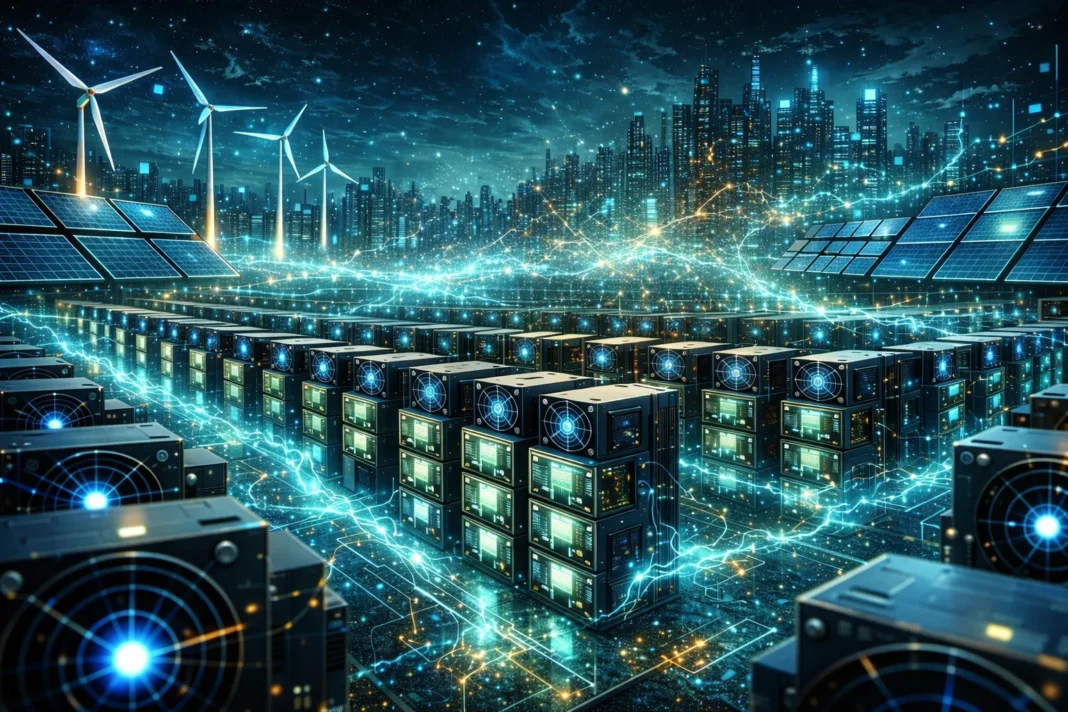
Bitcoin mining has evolved dramatically since the cryptocurrency was first introduced in 2009. What started as a simple process that could be performed on personal computers has grown into a massive global industry powered by specialized hardware and industrial mining farms.
Today, Bitcoin mining secures the world’s largest decentralized financial network. Miners perform trillions of cryptographic calculations every second in order to validate transactions and maintain the blockchain.
However, the mining industry continues to evolve rapidly. Technological innovation, energy infrastructure, and economic incentives are constantly reshaping how mining operates.
To understand where the industry is heading, it helps to first understand how Bitcoin mining actually works, including hashing, block creation, and mining rewards. Our complete guide explains the process step by step:
https://web3world.to/how-bitcoin-mining-actually-works-hashes-blocks-and-rewards/
In this article we explore:
- how mining hardware will evolve
- the role of renewable energy in mining
- how mining profitability may change
- the future of global hash rate
- what Bitcoin mining could look like in 2030
The Evolution of Mining Hardware
One of the most important drivers of mining innovation is hardware efficiency.
Bitcoin mining hardware has evolved through several generations:
CPU mining
GPU mining
FPGA mining
ASIC mining
Today, specialized ASIC miners dominate the industry because they are designed specifically for the SHA-256 hashing algorithm used by Bitcoin.
Our article comparing ASIC vs GPU mining hardware explains why ASIC devices became the standard for modern mining operations:
https://web3world.to/asic-vs-gpu-mining-why-bitcoin-miners-use-asic-hardware/
By 2030, mining hardware will likely become significantly more efficient. Future ASIC chips may deliver higher hash rates while consuming less electricity, improving mining profitability and reducing energy consumption.
The Global Hash Rate Will Continue Growing
The Bitcoin network hash rate represents the total computational power securing the blockchain.
As more miners join the network and deploy new hardware, the hash rate continues to grow.
This growth strengthens the security of the Bitcoin network by making attacks more difficult and expensive.
You can read more about this metric in our guide explaining Bitcoin hash rate and why it is the most important security indicator:
https://web3world.to/bitcoin-hash-rate-explained/
By 2030, analysts expect the global Bitcoin hash rate to be significantly higher than today due to increased adoption and improved mining infrastructure.
Mining Difficulty and Network Competition
Another key factor shaping the future of mining is Bitcoin mining difficulty.
The Bitcoin protocol automatically adjusts mining difficulty approximately every two weeks to maintain a consistent block production time of around 10 minutes.
As hash rate increases, mining difficulty rises as well.
Our article explaining Bitcoin mining difficulty and how the adjustment algorithm works explores this mechanism in detail:
https://web3world.to/bitcoin-mining-difficulty-explained/
In the future, mining will likely become more competitive as new hardware and infrastructure enter the market.
The Rise of Renewable Energy Mining
One of the biggest changes in the mining industry is the increasing use of renewable energy.
Because electricity is the largest operational cost for miners, mining companies are constantly searching for the cheapest power sources.
Many mining farms are now powered by:
- hydroelectric energy
- geothermal power
- solar farms
- wind energy
Research from the Cambridge Bitcoin Electricity Consumption Index shows that renewable energy already plays a major role in global mining activity:
https://www.cambridgebitcoin.com/
By 2030, renewable energy could power a significant portion of the global Bitcoin mining industry.
Industrial Mining Infrastructure
Mining has already transitioned from hobbyist setups to large industrial facilities.
Modern mining farms operate thousands of machines simultaneously and are designed to optimize power consumption and cooling efficiency.
Our guide explaining how industrial Bitcoin mining farms operate explores this infrastructure in detail:
https://web3world.to/bitcoin-mining-farms-explained/
Future mining farms may integrate advanced cooling technologies such as liquid immersion cooling, which allows mining hardware to operate more efficiently while reducing energy costs.
The Role of Mining Pools
Most miners today participate in mining pools, which combine computing power from thousands of participants.
Pools allow miners to receive consistent payouts rather than waiting for rare block rewards.
Our guide explaining how Bitcoin mining pools work describes why pool mining has become the dominant model in the industry:
https://web3world.to/bitcoin-mining-pools-explained/
In the future, mining pools may become more decentralized through new protocols designed to distribute control across the network.
Mining Economics and Block Rewards
Bitcoin mining economics will also evolve due to the Bitcoin halving cycle.
Every four years, the block reward for mining new Bitcoin blocks is reduced by half.
Over time, this means miners will receive fewer newly created bitcoins.
As block rewards decrease, transaction fees may become a larger portion of miner revenue.
This transition will play a significant role in shaping the future profitability of mining operations.
Regulation and Global Mining Distribution
Government policies and regulations will also influence the future of Bitcoin mining.
In recent years, several countries have introduced regulations affecting mining operations.
As a result, mining activity has shifted geographically, with major mining hubs emerging in regions that offer:
- stable regulatory environments
- access to cheap energy
- favorable climate conditions
Data from Blockchain.com mining analytics shows how mining hash rate distribution changes across countries over time:
https://www.blockchain.com/explorer/charts/hash-rate
This geographic redistribution will likely continue as the industry matures.
The Long-Term Future of Bitcoin Mining
Looking toward 2030, several trends will likely define the future of mining:
More efficient ASIC mining hardware
Greater use of renewable energy
Expansion of industrial mining farms
Increasing network hash rate
Evolution of mining economics
These trends suggest that Bitcoin mining will remain a highly competitive and technologically advanced industry.
Despite constant change, the core purpose of mining will remain the same: securing the Bitcoin network and maintaining the integrity of the blockchain.
Conclusion
Bitcoin mining has already undergone dramatic transformation since the early days of cryptocurrency. What began as a simple process performed on home computers has become a global infrastructure supporting the world’s largest decentralized financial network.
As technology evolves and energy systems improve, the mining industry will continue adapting to new challenges and opportunities.
By 2030, Bitcoin mining will likely be more efficient, more sustainable, and more integrated into global energy systems than ever before.
Understanding these trends helps reveal how the infrastructure behind Bitcoin continues to evolve as the network grows.
FAQ
Will Bitcoin mining still exist in 2030?
Yes. Bitcoin mining will continue as long as the network operates, although mining technology and economics will continue evolving.
Will mining become more energy efficient?
Yes. Future ASIC hardware and renewable energy integration are expected to significantly improve mining efficiency.
Will mining become centralized?
While large mining farms dominate the industry, mining pools and global competition help maintain decentralization.
