
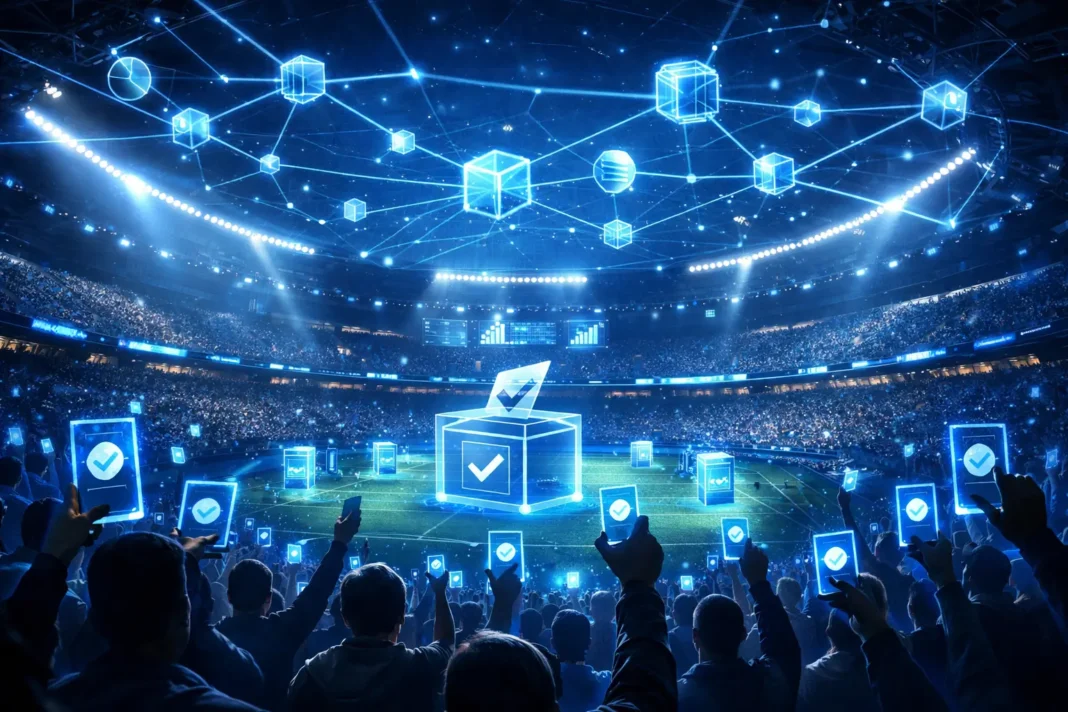
The relationship between sports teams and their fans may be about to change dramatically. A new project called Arena Two is exploring how blockchain technology could allow fans to participate directly in the governance of sports organizations through decentralized voting and tokenized ownership.
The experiment represents one of the latest attempts to apply Web3 infrastructure to industries beyond finance, using blockchain to create more transparent and participatory management systems.
If successful, this model could reshape how sports organizations interact with their communities.
The Problem With Traditional Sports Governance
In traditional sports organizations, decision-making power is usually concentrated among team owners, investors, and executive boards.
Fans, despite being the lifeblood of the sports industry, typically have little or no influence over important decisions such as:
- club strategy
- branding changes
- stadium developments
- ticket policies
- community programs
This centralized structure often creates tension between fans and club management, especially when controversial decisions are made without community input.
Web3 advocates believe blockchain could offer a solution.
How Blockchain Governance Works in Sports
The Arena Two project is experimenting with a governance system where fans can receive digital tokens representing voting rights within a sports ecosystem.
These tokens allow supporters to participate in blockchain-based voting mechanisms for certain club decisions.
Possible fan governance features include:
- voting on community initiatives
- selecting team branding or merchandise designs
- supporting youth development programs
- participating in fan-driven proposals
Blockchain ensures that all votes are recorded transparently and cannot be manipulated.
This creates a system where decision-making processes become more open and verifiable.
Tokenized Ownership in Sports Organizations
Another important concept being explored is tokenized ownership.
In this model, sports organizations issue blockchain tokens that represent fractional participation in the club ecosystem.
This does not necessarily mean fans fully own the team, but it allows them to become stakeholders in the club’s digital economy.
Tokenized ownership models could enable:
- fan-driven governance participation
- revenue sharing from digital initiatives
- access to exclusive experiences
- participation in club decisions
For sports organizations, this model can also strengthen fan engagement and global community building.
Web3 Is Already Entering the Sports Industry
Blockchain technology has already begun appearing in several areas of sports.
Examples include:
Fan Tokens
Several football clubs have launched fan tokens that allow supporters to participate in limited voting activities and access special perks.
NFT Collectibles
Sports leagues are increasingly issuing blockchain-based digital collectibles, allowing fans to own unique moments from games.
Ticketing Systems
Blockchain ticketing platforms are being tested to prevent ticket fraud and scalping.
The Arena Two experiment goes one step further by testing whether decentralized governance could become a real operational model for sports organizations.
Potential Benefits of Blockchain Sports Governance
If implemented successfully, blockchain governance could offer several advantages.
Greater Transparency
All voting activity and governance decisions are recorded on blockchain networks, making the process publicly verifiable.
Stronger Fan Engagement
Supporters would have a direct role in shaping the future of their favorite teams.
Global Participation
Fans from anywhere in the world could participate in governance without geographical restrictions.
New Revenue Models
Tokenized ecosystems could create new funding channels for sports organizations through digital economies.
Challenges Still Facing Web3 Sports Governance
Despite its potential, blockchain governance in sports faces several obstacles.
Regulatory Issues
Sports organizations operate within complex legal frameworks, and tokenized governance models must comply with financial and corporate regulations.
Risk of Token Speculation
If governance tokens become speculative assets, the focus could shift from participation to profit.
Balancing Fan Power and Management Control
Clubs must find a balance between community participation and maintaining professional management structures.
The Future of Fan-Owned Sports Communities
The Arena Two experiment highlights a broader trend: Web3 technology is expanding into industries far beyond finance.
By combining blockchain voting systems, tokenized participation, and decentralized governance models, sports organizations may be able to create more inclusive ecosystems where fans play an active role in shaping their communities.
While it remains unclear whether fully decentralized sports governance will become mainstream, experiments like Arena Two demonstrate how blockchain could transform the relationship between teams and their supporters.
In the coming years, Web3 technology may not only change how we manage digital assets — it could also redefine how sports communities operate around the world.
Read more :
Layer-1 vs Layer-2 Blockchains Explained
Bitcoin vs Ethereum Transactions Comparison
How Bitcoin Hashes Secure the Network
