
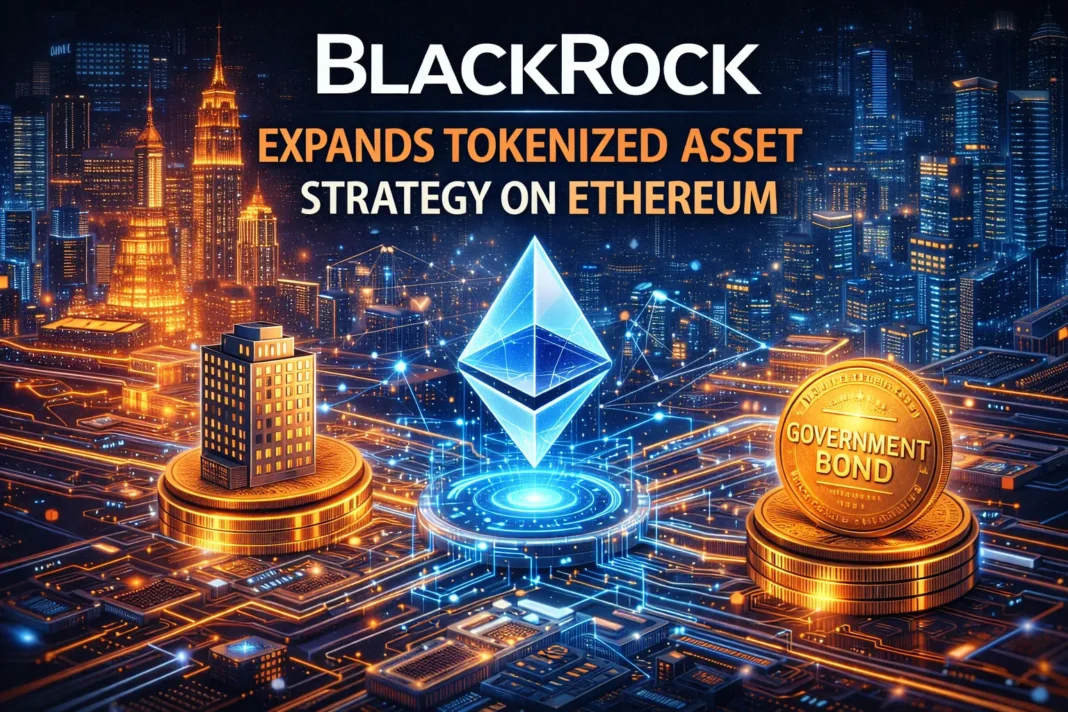
Institutional interest in blockchain technology continues to grow as asset management giant BlackRock expands its exploration of tokenized financial assets on the Ethereum ecosystem.
The initiative reflects a broader shift in global finance, where traditional institutions are increasingly experimenting with blockchain infrastructure to modernize capital markets.
Tokenization allows traditional financial assets such as bonds, funds, and real estate to be represented as digital tokens on a blockchain. These tokens can then be traded, transferred, and integrated into decentralized financial systems.
For large institutions managing trillions of dollars in assets, blockchain technology offers a potential pathway toward faster settlement, improved liquidity, and greater transparency in financial markets.
What Tokenized Assets Mean for Global Finance
Tokenization is rapidly becoming one of the most important developments in the Web3 ecosystem.
By converting traditional assets into blockchain-based tokens, financial institutions can unlock new possibilities such as:
- fractional ownership of large assets
- global access to investment opportunities
- faster settlement of transactions
- programmable financial contracts
The concept is often referred to as Real World Assets (RWA) in the crypto industry.
Blockchain platforms allow these assets to interact with smart contracts, enabling new forms of automated financial infrastructure.
External source:
Ethereum token standard
Why Ethereum Is the Preferred Infrastructure
Many institutions exploring tokenization are choosing the Ethereum ecosystem because of its mature developer tools and smart contract capabilities.
The network supports decentralized applications that allow digital assets to be issued, traded, and managed automatically through blockchain protocols.
Ethereum’s growing ecosystem of scaling solutions also allows institutions to process transactions efficiently.
Internal reading:
To understand how Ethereum handles large transaction volumes, read:
Layer-1 vs Layer-2 Blockchains Explained: What Actually Scales Web3
Layer-2 networks significantly increase Ethereum’s scalability while maintaining the security of the underlying blockchain.
Institutional Finance Is Moving Toward Blockchain
The exploration of tokenized assets by firms like BlackRock highlights a growing trend: traditional financial institutions are beginning to integrate blockchain technology into their infrastructure.
In recent years, major banks and asset managers have been experimenting with:
- blockchain-based settlement systems
- tokenized securities
- decentralized financial services
- digital asset investment funds
These developments suggest that blockchain could eventually become part of the core infrastructure of global financial markets.
Internal reading:
If you want to learn more about how blockchain networks process transactions, read:
How Bitcoin Mining Actually Works: Hashes, Blocks, and Rewards
How Tokenization Could Transform Investment Markets
Tokenized assets could significantly change how investors interact with financial markets.
Fractional Ownership
Blockchain allows assets to be divided into smaller digital units, making investment opportunities accessible to a wider range of participants.
Increased Liquidity
Tokenized assets can be traded continuously on blockchain networks rather than relying on traditional market hours.
Faster Settlement
Blockchain transactions can settle in minutes rather than the days often required in traditional financial systems.
Internal reading:
For a deeper understanding of mining infrastructure that secures blockchain networks, see:
Complete Guide to Bitcoin Mining in 2026: How It Works, Hardware, and Profitability
Challenges Facing Tokenized Finance
Despite strong momentum, the tokenization of financial assets still faces several obstacles.
Regulation
Governments and financial regulators are still developing frameworks for digital securities and tokenized assets.
Infrastructure
Large-scale adoption requires robust blockchain infrastructure capable of handling significant transaction volumes.
Internal reading:
New hardware developments may also play a role in scaling blockchain infrastructure, as explored in:
China’s New Blockchain Chip Could Boost Bitcoin Mining Speed 50×
The Future of Tokenized Assets
Many analysts believe tokenization could eventually move trillions of dollars worth of assets onto blockchain networks.
By combining traditional finance with decentralized technology, institutions may be able to build more efficient and transparent financial systems.
If adoption continues to grow, tokenized assets could become one of the most significant use cases for blockchain technology in the coming decade.
Internal reading:
You can also explore broader blockchain adoption trends in:
The Biggest Web3 Myths That Refuse to Die (And the Truth Behind Them)
Final Thoughts
BlackRock’s continued exploration of tokenized financial assets highlights how quickly institutional finance is moving toward blockchain technology.
As infrastructure improves and regulatory frameworks evolve, tokenization may transform how financial assets are issued, traded, and managed across global markets.
For the Web3 ecosystem, institutional adoption represents a major milestone that could accelerate the integration of blockchain technology into the global financial system.
FAQ
What are tokenized assets?
Tokenized assets are digital representations of real-world assets such as real estate, bonds, or funds stored on a blockchain.
Why is BlackRock interested in blockchain?
Large asset managers are exploring blockchain to improve financial settlement systems, liquidity, and global access to investment markets.
Why is Ethereum used for tokenization?
Ethereum supports smart contracts that allow financial assets to be issued and managed automatically on blockchain networks.
