
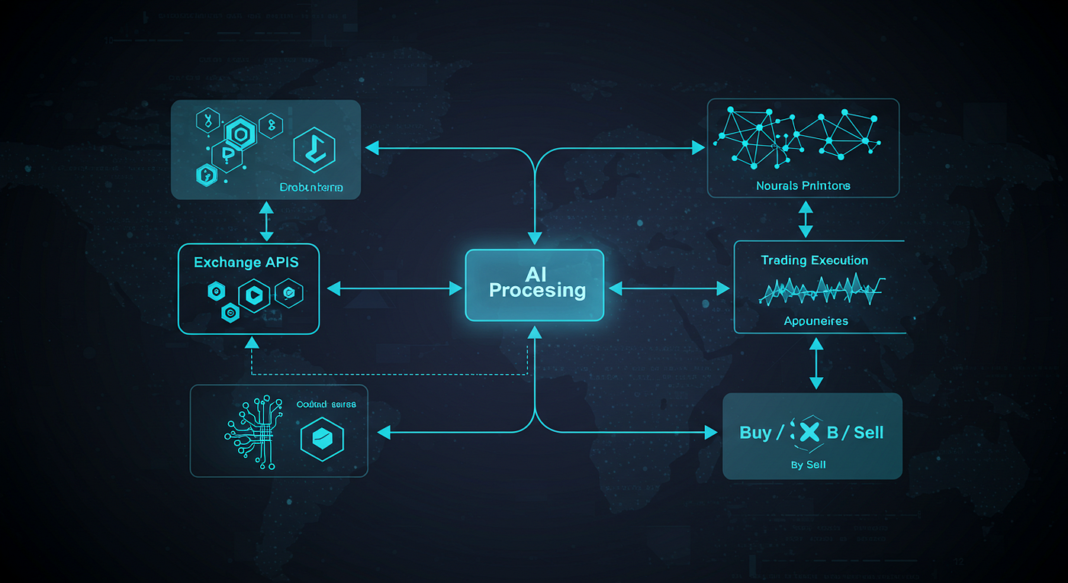
The intersection of artificial intelligence and decentralized finance (DeFi) is rapidly transforming the Web3 ecosystem. In 2026, a new wave of technology is emerging: autonomous AI agents capable of trading cryptocurrencies independently on blockchain networks.
Unlike traditional automated trading bots, these AI agents operate with significantly higher autonomy. They can analyze on-chain data, interpret market sentiment, execute trades across decentralized exchanges, and continuously adapt strategies without human intervention.
This development could mark the beginning of a fully automated financial layer within Web3, where software agents interact with blockchain markets on behalf of users.
What Are Autonomous AI Trading Agents?
Autonomous AI trading agents are software programs powered by machine learning models that interact directly with blockchain protocols.
These systems can:
- Monitor on-chain transaction activity
- Analyze market liquidity and token flows
- Interpret crypto market sentiment
- Execute trades across DeFi platforms
Unlike traditional bots that rely on static algorithms, AI agents continuously improve their strategies by learning from market data.
In many cases, these systems interact with smart contracts, enabling them to operate without centralized control.
How AI Agents Trade on Web3 Networks
Autonomous trading agents typically rely on several blockchain components.
1. On-Chain Data Analysis
AI agents can monitor blockchain activity in real time, including:
- wallet movements
- liquidity pool changes
- token issuance
- smart contract interactions
This allows them to detect potential market opportunities faster than traditional traders.
2. DeFi Protocol Integration
Most AI trading agents operate through decentralized exchanges such as:
- Uniswap
- Curve Finance
- dYdX
These protocols allow agents to trade directly through smart contracts without relying on centralized exchanges.
3. Automated Portfolio Management
AI agents can automatically rebalance digital asset portfolios by adjusting positions based on market signals.
This includes:
- shifting liquidity between tokens
- hedging risk through derivatives
- optimizing yield strategies across DeFi platforms
As DeFi becomes more complex, automated asset management systems may become essential tools for investors.
Why AI Agents Could Reshape Crypto Markets
Autonomous AI trading agents could fundamentally change how crypto markets operate.
Several key advantages drive their rapid adoption.
Faster Market Reactions
AI agents can analyze blockchain data instantly and execute trades within seconds.
This speed allows them to exploit opportunities that human traders might miss.
Continuous 24/7 Trading
Crypto markets never close. AI agents can monitor the market continuously, executing trades around the clock without fatigue.
Data-Driven Decisions
By processing massive amounts of blockchain data, AI systems can identify trends and patterns far beyond human analytical capacity.
The Rise of Agent-to-Agent Economies
Some developers believe autonomous AI traders represent the first step toward a new concept known as the agent economy.
In this model:
- AI agents hold digital wallets
- agents interact with smart contracts
- software agents transact with each other
These systems could enable machine-to-machine financial networks, where software applications buy services, compute power, and data directly through blockchain payments.
Challenges and Risks
Despite their potential, autonomous trading agents also introduce new risks to crypto markets.
Smart Contract Vulnerabilities
If AI systems interact with vulnerable smart contracts, they could unintentionally trigger exploits or financial losses.
Market Manipulation
Highly sophisticated trading agents might amplify volatility or exploit market inefficiencies faster than regulators can respond.
Regulatory Uncertainty
Autonomous financial systems raise new legal questions about accountability, transparency, and financial oversight.
Governments and regulators are still determining how these systems should be classified.
The Future of AI-Powered Web3 Finance
Despite the challenges, many industry analysts believe AI-driven financial automation will become a core component of Web3 infrastructure.
Future developments could include:
- AI-managed investment funds
- autonomous DeFi liquidity managers
- decentralized AI hedge funds
- machine-to-machine payment networks
As artificial intelligence becomes more deeply integrated with blockchain technology, the financial systems of the future may operate with minimal human intervention.
Final Thoughts
The rise of autonomous AI trading agents represents one of the most important technological trends shaping the Web3 ecosystem.
By combining artificial intelligence with decentralized financial infrastructure, developers are building systems capable of analyzing markets, executing trades, and managing digital assets entirely autonomously.
If adoption continues, the crypto industry could soon enter an era where software agents become active participants in global financial markets.
External links
- According to blockchain developers at Ethereum research community…
cointelegraph.com- ethereum.org
coindesk.com
Read more :
Layer-1 vs Layer-2 Blockchains Explained
Complete Guide to Bitcoin Mining in 2026
Chainlink Surges as Institutional Capital Moves Into Oracle Networks
Tokenized Assets Market Could Reach Trillions by 2030
The Biggest Web3 Myths That Refuse to Die